
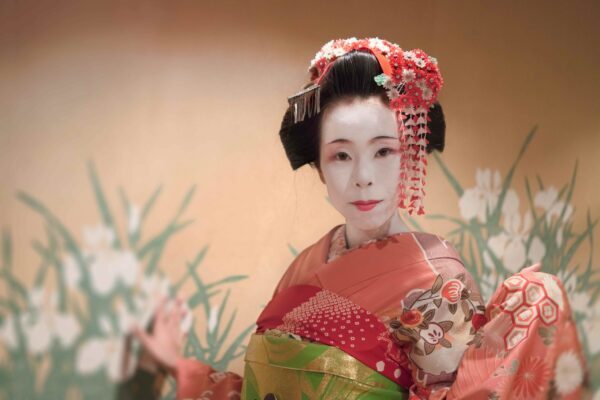
Her real name is lost. What remains is a borrowed title, a fragment of her father’s post and a name she gave a character. Still, Murasaki Shikibu speaks across centuries, a voice that slipped through court screens and scrolls. Her novel does not simply endure, it remains embedded in the structure of Japanese prose, studied more than read, referenced more than recited.
Biography and Ancestral Roots
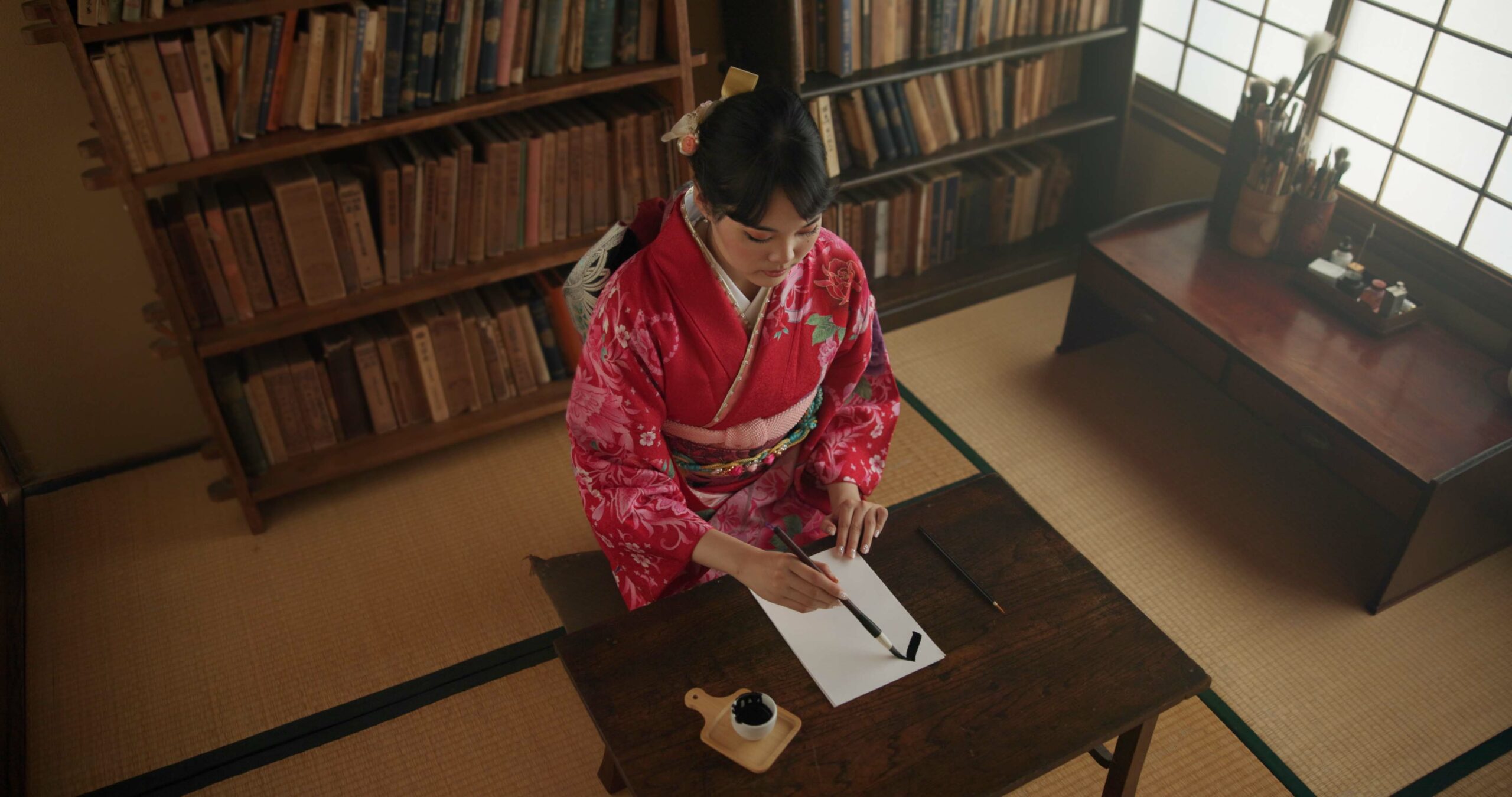
Born around 973, Murasaki Shikibu was a daughter of the prestigious Fujiwara clan, though not of its central line. Her father, Fujiwara no Tametoki, held scholarly posts, which gave her access to education – an unusual privilege for a woman of her time. She read Chinese classics, reportedly in secret, since such learning was considered unsuitable for women at court.
There’s something telling in this: she studied not despite the system, but within its shadow. Late at night, after courtly duties, she would read a rarity in an oral culture. This solitary education shaped her perception of language as internal, reflective, almost hidden.
Her personal name remains unknown. “Murasaki” likely comes from a character in her novel; “Shikibu” refers to her father’s office. Even in authorship, she was veiled.
A Path Toward Writing Genji
She did not arrive at court with literary ambition. Murasaki served Empress Shōshi in a setting where expression was measured in syllables, and emotion in seasonal metaphors. Poetry passed as conversation. Paper was cut by hand, fragrance applied to ink. But still, something pressed against the constraints.
Her husband died early. No grand tragedy, no lament. Just absence. She retreated, not dramatically, but inward – into observation, repetition, quiet. And somewhere between the verses and the silences, The Tale of Genji began to take shape. It wasn’t one thing. Not quite novel, not diary. Something in between and larger than either.
Factors That Shaped Her Literary Path:
- Her position as a court lady
- The isolation following her husband’s death
- Her unorthodox access to Chinese learning
- The capacity for observation over assertion
She didn’t invent fiction. But she reconfigured what prose could contain: interiors, fluctuations, political detail – not as backdrop, but as current.
Thematic Significance in Classical Literature
The Tale of Genji is long, spanning more than fifty chapters, but not in the way epics are long. It drifts, circles back, lingers. Characters appear, fade, re-emerge in memory. At the center is Genji – beautiful, intelligent, sometimes cruel. His world gleams with courtly elegance, yet everything within it feels temporary, already vanishing.
The structure defies early definitions of the novel. It isn’t linear, nor moralistic. Instead, it unfolds like silk in layers: reflective, shimmering, prone to tangle.
Murasaki Shikibu crafted a world where women spoke in glances and replied in verse. Where power was soft, elusive – a word placed just so in a moonlit corridor. And behind it all, the awareness of impermanence: the Buddhist idea that beauty decays, and that decay itself is beauty. She wrote not to instruct, but to register.
Impact on the Status of Women in the Heian Period
Heian literature often emerged from women’s quarters. Unlike official histories written in Chinese, the vernacular kana script gave women a medium for emotion, daily nuance, and narrative form. Murasaki wasn’t alone – but she was definitive. Her influence shaped not only her contemporaries but those centuries ahead:
- She elevated the diary form into artistry
- Inspired later authors like Sei Shōnagon to rival or respond
- Demonstrated that a woman’s gaze could encompass empire, eros, and decline
- Anchored classical Japanese prose in female authorship
Murasaki Shikibu didn’t speak loudly. But her silence carried structure. And even now – centuries later – it still resounds, like a phrase left suspended in a garden at dusk.